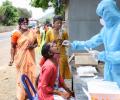
Three of the four major states delayed testing despite worsening indicators. Only Tamil Nadu quickened the pace after the first signs of deterioration.
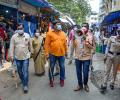
As the second wave sweeps through the country, restrictions on movement and public activity are not as strict, even though the caseload and death rate is worse than before, reports Abhishek Waghmare.
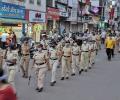
It has taken 51 days to reach a daily caseload of 84,000 from 11,000, as against 85 days taken in the first wave, report Abhishek Waghmare and Sohini Das.

To achieve herd immunity, rapid vaccination is the only hope.
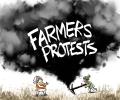
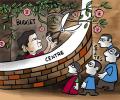
With the farmers' protest against the three new laws and in support of legalising the minimum support price (MSP) going strong, state governments have announced a slew of measures in their annual Budgets to placate farmers. The Centre kicked things off in the Union Budget by assuring farmers that the MSP would continue and coming out with a report card to demonstrate its commitment. However, these efforts don't seem to have yielded tangible results. In their respective Budgets, states chose to go a step further by announcing a variety of measures.

While the Constitution makes everyone in India eligible to work anywhere in the country, states have used legal loopholes to frame laws.
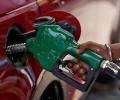
While consumers feel that petrol pinches directly, diesel hurts indirectly, as it is an input in almost all the goods and services we use.
Consumers are paying an exorbitant 180 per cent tax on petrol, and 140 per cent on diesel in Delhi and in most other towns in India. Little wonder then that the central government expects a staggering Rs 3.46 trillion by levying excise duties on retail sale of the two fuels this year, and Rs 3.2 trillion the next. States would generally have had reason to cheer, as they command a 41 per cent share in Centre's tax revenues. But as the Centre has raised excise duties in the form of "cess," the revenue proceeds are by nature not shareable with states.

To make possible discretionary spending including capex and that on welfare, the government decided to borrow more than planned in FY21 -- Rs 12.7 trillion.
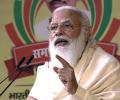
Demoralising the private companies and disregarding their contribution won't do any good to the country or its youth as our experience has shown that private enterprises in mobile manufacturing has lead to every poor family owning a mobile phone now, while the country's private sector in the pharmaceutical space has been serving humanity through vaccines and medicines during Covid times, Modi said.

That's a big change that was made possible due to corporate tax cuts. Corporation tax collection in FY22 will be lower than even the FY18 levels, reports
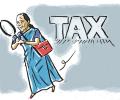
The continuing fiscal stimulus is heavily tilted towards capex, to the extent that it chips away a part of revenue spending. Accounting for other areas of revenue expenditure, such as salaries, pensions, subsidies and defence (committed spend), the room to spend on welfare schemes, health and education will narrow in FY22.
The survey showed that women workers fared worse than men when it came to employment recovery (53 per cent versus 57 per cent) and urban areas have been much worse hit despite a quicker bounce back.
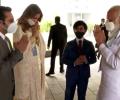
The PM's visit would signal a strong intent towards making sure India becomes a beneficiary as vaccines become a massively traded commodity in the coming years.

'We were among the first organisations to voice our opposition to the three Acts long before anyone else and had sent memorandums collected from 3,000 tehsils across the country to the agriculture ministry to amend the Bills, but nothing was accepted,' says BKS general secretary Badri Narayan Chaudhary.
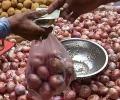
During this time of the year, potatoes and vegetables come from Punjab and Haryana.

Overall, small savings have amassed Rs 1.17 trillion from April-September - 26 per cent more than the previous year. But in those six months, the economy lost 24 per cent in the first three months, and is slated to lose 10 per cent in the second quarter.
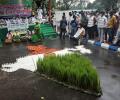
Though the Bills of Punjab and Rajasthan have a lot of similarities, the one approved by the Chhattisgarh Assembly is structurally different. None of the three has tried to address a key demand of the agitating farmers in full, which is to make all payments below the MSP, within and outside mandis, illegal.

A closer look at the data reveals that a lot of the items are not part of this calculation. The notable ones include buffalo meat, marine exports, raw cotton, and plantation crops such as tea, coffee, rubber, etc.
'If you see the composition of items which are causing this spike in prices, most of them have little to do with the kharif harvest, except for pulses and vegetables to some extent.' 'I don't know on what basis the government is claiming that food prices will moderate in the weeks to come.'
 © 2025 Rediff.com - Investor Information - Advertise with us - Disclaimer - Privacy Policy - Sitemap - Feedback - About us - Terms of use - Grievances